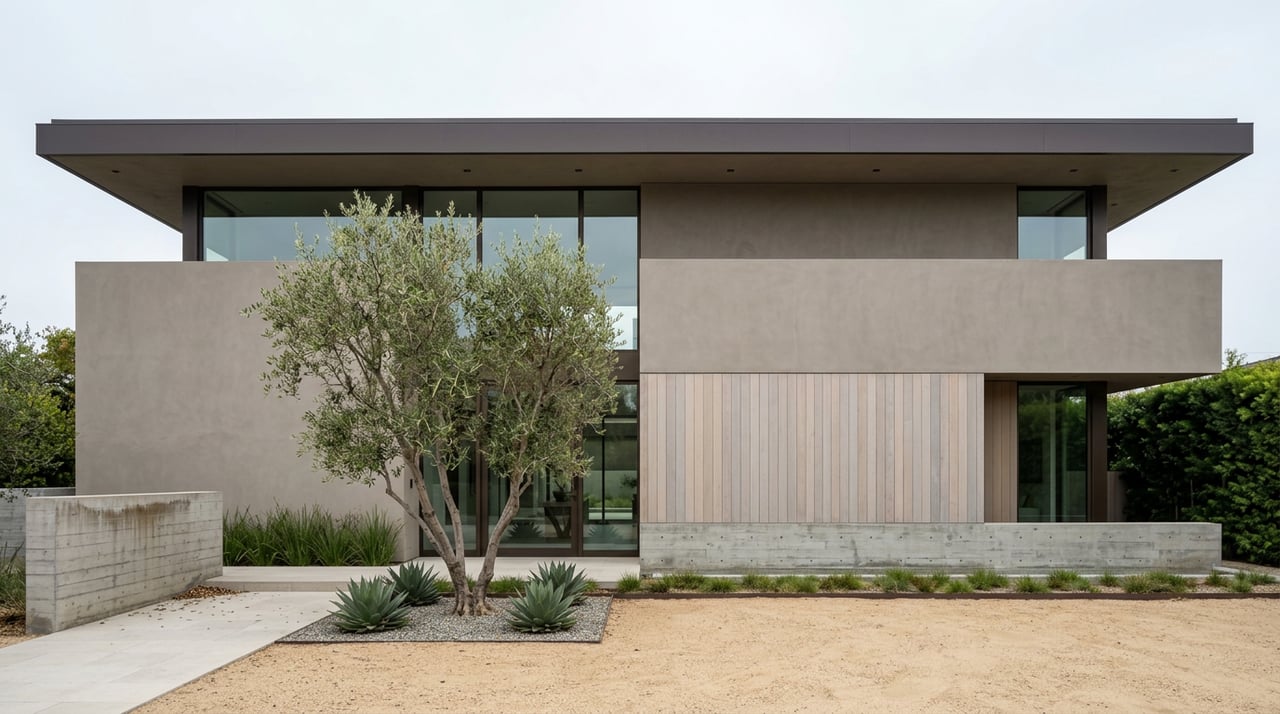
On November 21, 2025, a house on N Kagawa Street became the first home in Pacific Palisades to receive a Certificate of Occupancy after the January 2025 fire. Thomas James Homes built it in roughly six months, a pace the company's CEO called proof of what happens when the public and private sides of a rebuild move with urgency. Mayor Karen Bass held the milestone up as evidence of one of the fastest disaster recoveries in modern California history.
Nine months later, on August 13, 2026, the count of finished homes stood at 35. Four days after that, it had ticked up to 37. In that same window, the Pali Rebuild Map, tracked by Kevin Pazirandeh, logged more than 1,000 addresses under active construction and permit submissions past 1,700. The gap between those numbers, thousands of projects moving and only a few dozen finished, is the real story for anyone weighing a lot purchase or a mid-construction buy in the Palisades right now. It has almost nothing to do with a slow permit office.
The Number Everyone Quotes
The permitting reform is real. Within a week of the fire, Mayor Bass issued Emergency Executive Order 1, which created the One-Stop Rebuilding Center, waived CEQA review for eligible projects, and directed city departments to complete initial review within 30 days. By November 2025, more than 5,600 people had come through that center. The Los Angeles Department of Building and Safety reported an average of about 49 days from application to issued permit as of early January 2026, according to Crosstown reporting, faster than a typical single-family review before the fire. More than 70 percent of single-family permit clearances that used to require sign-off from multiple departments were no longer needed at all.
So when people say permitting got faster, they are right. The problem is that this is the wrong number to watch if you are deciding whether to buy a burned lot or a house that is six months into framing.
A permit tells you the city said yes. It does not tell you the homeowner has the money to keep pouring concrete.
Where the Real Clock Is Running
Every fire policy in California carries two separate deadlines that have nothing to do with LADBS. Additional Living Expense coverage, the money that pays for a family's rent while their home is rebuilt, has a statutory floor of 24 months from the date of loss. For a loss on January 7, 2025, that floor runs out in early 2027. State law allows up to 12 more months if the delay is outside the homeowner's control, and permit delays and contractor unavailability both qualify, but the extension has to be requested. It does not arrive automatically.
Replacement-cost coverage runs on a longer clock: a minimum of 36 months from the date of the first actual-cash-value payment, with six-month extensions available for good cause. That gives most homeowners more runway than their ALE money, which is exactly why a family can be fully entitled to build and still decide to sell the lot instead. Construction industry reporting through August 2026 keeps landing on the same conclusion across both Pacific Palisades and Altadena, a functionally different jurisdiction with no Coastal Commission step and a different permitting body entirely: insurance settlement timing and contractor capacity are the bottleneck, not the government office issuing the paperwork. Altadena's own numbers as of mid-August 2026, roughly 97 homes finished and 1,785 under construction against 3,510 applications, show the identical ratio problem. The constant across two different cities and two different permitting systems is private financing, not public review.
Three Kinds of Rebuild Property You Can Buy Right Now
The Palisades market currently splits into three distinct products, and each one carries a different kind of diligence.
| Property Type | What You're Buying | Typical Seller Motivation | What To Check Before You Offer |
|---|---|---|---|
| Raw cleared lot | Debris-cleared land with Army Corps sign-off already complete | An insurance settlement in hand but no appetite to manage a build, or an ALE clock running low | Whether original footprint documentation survives, since it decides whether a rebuild can use the 110 percent coastal exemption |
| Mid-construction | A permit, a partial structure, and someone else's contractor relationship | Financing exhausted mid-project, or a fractured relationship with the builder | Whether the permit was pulled as an EO1 or EO8 eligible project, and whether it is still active or has lapsed |
| Near-complete | A home that has cleared most inspections and is close to Certificate of Occupancy | A family that finished rebuilding but decided not to return | The final inspection punch list, and whether new Zone 0 defensible-space rules take effect during your escrow |
That last row matters more than it looks. The Board of Forestry approved new Zone 0 regulations in August 2026, rules governing combustible material within five feet of a structure, but they are still moving through the Office of Administrative Law with no effective date set. A property that looks finished today could face a new landscaping requirement before final sign-off if the rule takes effect while you are in escrow.
The Entitlement Mechanics Worth Knowing Before You Write an Offer
The 110 percent like-for-like rule. Projects that rebuild within 110 percent of the original footprint and height qualify for a coastal exemption and skip Coastal Development Permit review entirely, a real shortcut given how much of the Palisades sits inside the California Coastal Zone. Cross that threshold and the project loses the automatic exemption, moving instead into a waiver pathway for zoning-compliant single-family homes.
The ADU-first Certificate of Occupancy rule. If an accessory dwelling unit qualifies as an Eligible Project under EO1 or EO8, it can be finaled and occupied before the main house is done. But the main house permit still has to be pulled within seven years of the relevant executive order's effective date, and construction has to finish within three years of that permit's issuance. A lot with an occupied ADU does not mean the main house clock has stopped.
The SB9 lot-split freeze. Under Emergency Executive Order 9, SB9 lot splits and two-unit developments are prohibited within Very High Fire Hazard Severity Zones inside the Palisades fire boundary. A densification strategy that works in plenty of other Los Angeles neighborhoods is off the table here while that order stands.
Hillside lots carry a geotechnical layer the flats don't. Properties inside the Palisades Geohazard Risk Assessment Zones face additional soils and slope-stability review no matter which permitting track they use. Fire exposure changes hillside soil composition in ways that raise erosion and slide risk, so this review applies even to lots that already cleared debris removal.
Why Permits Issued Oversells Progress
A single address in the Palisades can generate a dozen or more separate permits across departments, including grading, electrical, demolition, and plumbing, before a home is finished. That means a citywide count of permits issued is not a homes-finished number, no matter how the figure gets reported. The certificate-of-occupancy count is the narrower and more honest gauge, which is why the move from 35 to 37 finished homes over four days in August 2026 tells you more about actual progress than the count of submissions crossing 1,700.
What This Means If You're Evaluating a Palisades Lot or Mid-Rebuild Purchase
The entitlement system in the Palisades is running about as fast as it is going to run. The friction that determines whether a deal closes cleanly sits in the seller's insurance file and their contractor's schedule, not in a planning department queue. That should reshape how you order diligence on a specific property. Ask for the insurance settlement history and the contractor agreement before you ask for the permit history, because on most Palisades properties right now, the permit is the part that is already fine.
Frequently Asked Questions
If I buy a cleared lot, do I inherit the previous owner's permits? No. Permits attach to the applicant and the specific plan set, not the parcel. If the prior owner used a design from the city's Standard Plan Pilot Program, that plan may still be available, and city per-project fees are waived for anyone who owned their home on or before January 7, 2025. A buyer who did not own the property on that date would need to negotiate directly with the plan's architect for licensing.
Can I do an SB9 lot split on Palisades land right now? Not within the fire boundary. Emergency Executive Order 9 blocks SB9 lot splits and two-unit developments in Very High Fire Hazard Severity Zones inside the burn area, so that strategy is unavailable here while the order remains in effect.
If I buy a home mid-construction, does the seller's insurance clock come with the property? No. ALE and replacement-cost timelines are tied to the seller's claim, not the address, and they do not transfer at closing. But understanding how far along that claim was is one of the clearest ways to gauge why a seller is walking away mid-build and what condition the construction is actually in.
If you are weighing a Palisades lot, a mid-rebuild property, or a finished rebuild against the rest of the market, Amir Jawaherian can walk through the entitlement history, insurance timeline, and construction status of a specific address before you write an offer. Schedule a Private (Confidential) Consultation.