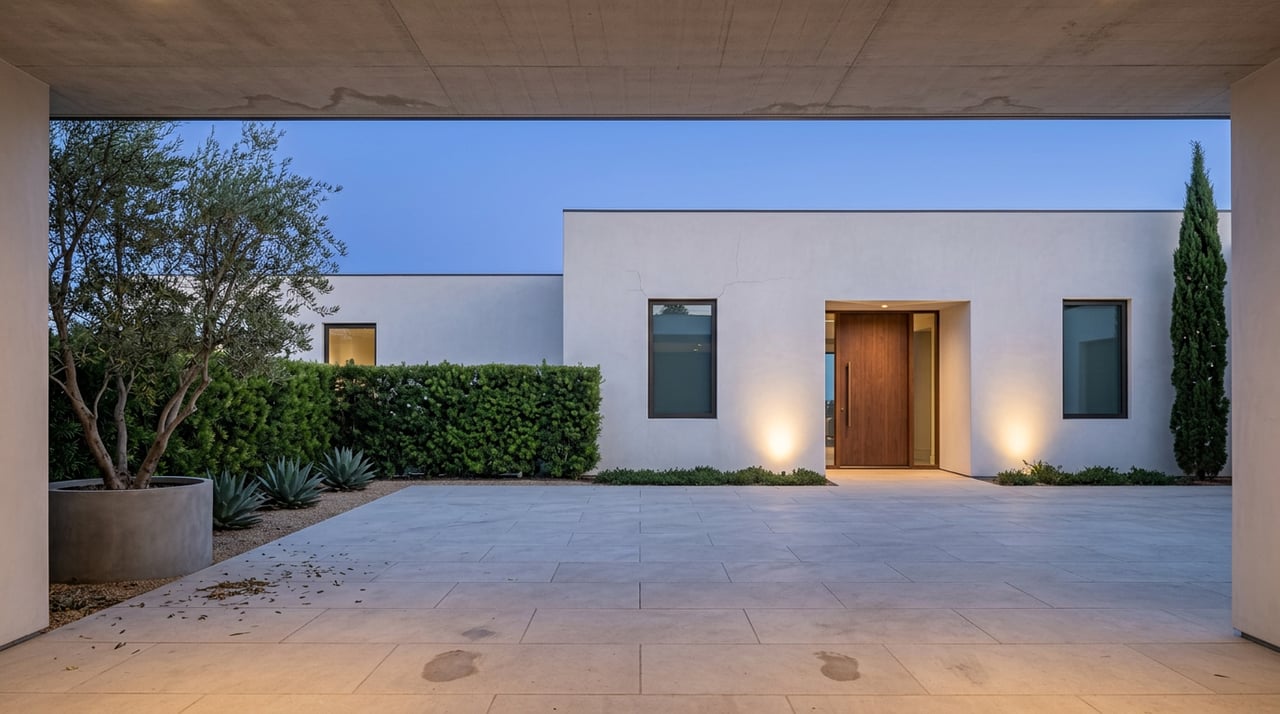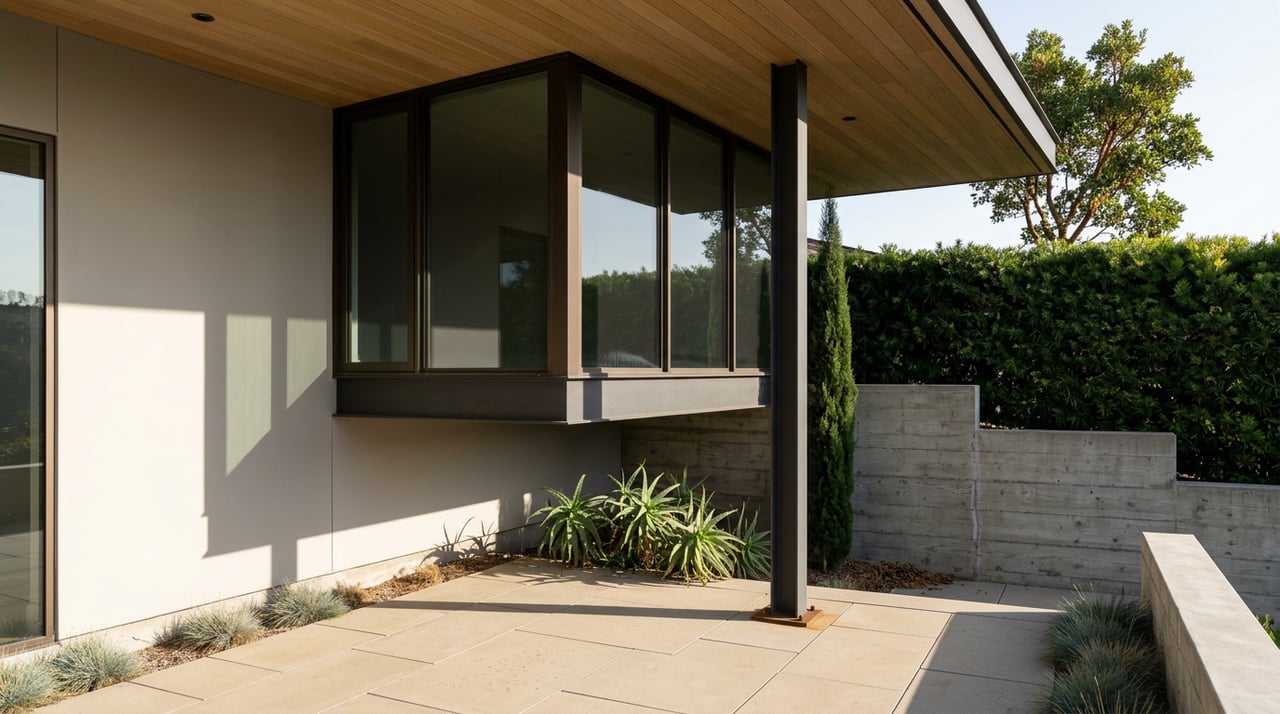
Two nearly identical hillside homes on Sunset Plaza Drive go to market within a few months of each other. One lists at $5,395,000. The other lists at $5,410,000. On paper, the second seller has a stronger price. At closing, the second seller nets over $200,000 less than the first, not because of agent commissions, not because of repair credits, but because their sale price crossed one specific number: the City of Los Angeles's Measure ULA threshold.
Most sellers hear "4 percent tax over $5.4 million" and assume it works like an income tax bracket, where only the dollars above the line get taxed at the higher rate. That assumption is wrong, and in a neighborhood where trophy hillside estates and entitled redevelopment lots both routinely trade near this exact number, it is the single most consequential misunderstanding a Sunset Plaza seller can carry into a listing conversation.
The Cliff, Not a Bracket
Measure ULA is a City of Los Angeles transfer tax, layered on top of the standard 0.45 percent city and 0.11 percent county documentary transfer taxes that apply to every sale. Effective for any transaction closing after June 30, 2026, the Los Angeles Office of Finance sets the current thresholds at $5,400,000 and $10,900,000. Sales between those two figures owe a 4 percent tax. Sales at or above $10,900,000 owe 5.5 percent.
Here is the part that catches sellers off guard: both rates apply to the entire sale price, not the portion above the threshold. There is no bracket. There is no blending. Cross the line by a single dollar and the full percentage applies to every dollar in the transaction. Run the numbers across a few price points and the cliff becomes obvious:
- A sale at $5,399,999 owes no ULA tax at all, only the base city and county transfer taxes.
- A sale at $5,400,001 owes 4 percent on the full price, roughly $216,000.
- A sale at $10,900,000 owes 5.5 percent on the full price, $599,500.
- A sale at $20,000,000 owes 5.5 percent on the full price, $1.1 million.
Ten dollars of purchase price separates the first two scenarios. Over $200,000 separates the tax bills. The tax is also calculated on the gross consideration, not the gain, and it cannot be deferred through a 1031 exchange. A seller who takes a loss on the sale still owes the full percentage on whatever the property changed hands for. Advocates challenging the measure have pointed to Dodgers first baseman Freddie Freeman's Los Angeles home sale as an example, arguing he owed $2 million in ULA tax despite selling for less than he originally paid, because the tax is indifferent to profit or loss. It only measures what changed hands.
Why This Lands Differently in Sunset Plaza
Plenty of Los Angeles neighborhoods sit near the ULA threshold. Few sit inside it as consistently as Sunset Plaza. The streets that command the highest premiums here, Sunset Plaza Drive, Rising Glen Road, and Skylark Lane in particular, are prized for gated cul-de-sacs and south-facing ridge lots with unobstructed views, and homes built by architects including Hagy Belzberg, Paul McClean, John Lautner, and Jerrold Lomax have anchored the neighborhood's reputation for design pedigree that finished properties routinely clear well above $5.4 million as a matter of course, not as an exception.
The threshold also matters on the other side of the market: the raw land. Sunset Plaza has a real and active trade in entitled or RTI (ready-to-issue) redevelopment lots, teardowns sold with approved plans attached. A parcel on Sunset Plaza Drive listed this summer with RTI plans for a 4,800 square foot contemporary home came to market near $2 million. Another nearby parcel with approved plans for a three story, roughly 3,400 square foot residence with an infinity pool closed in June 2026 for $1,350,000. Both of those land sales fall comfortably under the ULA threshold. The finished spec homes they become will not. Once built and resold, those properties will very likely land in the same $5.4 million to $10.9 million band that defines the rest of the neighborhood, which means the tax has to be underwritten into a development's exit proceeds from the day the land closes, not treated as a line item to figure out later.
What Sellers Are Actually Doing About It
The threshold has changed seller behavior in ways that show up in the data. Economic research out of UCLA has found that since Measure ULA took effect in April 2023, the odds of a Los Angeles property selling above $5 million have fallen by as much as 55 percent. That is not a claim about fewer expensive homes existing. It is evidence that owners near the line are pricing around it, holding rather than listing, or moving transactions through channels where the number is negotiated privately rather than benchmarked publicly.
That last point matters in a neighborhood like this one. Sunset Plaza has long functioned as a market where a meaningful share of activity happens off market, particularly among owners of the neighborhood's most private hillside compounds. A public list price anchors buyer expectations to a round number and makes it harder to solve for a net figure that avoids an unnecessary cliff crossing. A negotiated, confidential sale gives a seller and a single qualified buyer more room to land on a price that reflects the property's actual value without triggering a tax consequence that neither side intended.
The Tax Is Not Going Away Before You Sell
Sellers weighing timing sometimes ask whether a ballot measure might change the picture before the end of 2026. As of today, the answer is no. A statewide initiative backed by the Howard Jarvis Taxpayers Association, which would have capped local transfer taxes like ULA, qualified for the November 2026 ballot earlier this year. In June 2026, the organization withdrew that initiative as part of a deal with Governor Newsom and legislative leaders, and the substitute measure that will appear on the ballot instead, Proposition 43, applies only to future local special taxes and would not repeal or modify Measure ULA. Separately, the Los Angeles City Council has floated narrower exemptions, including relief for new multifamily construction and for Pacific Palisades fire victims selling their properties, but none of those proposals affect the resale of an existing Sunset Plaza estate, and as of this writing none have qualified for a ballot. Barring a change no one currently anticipates, any Sunset Plaza sale that closes for the rest of 2026 will be subject to the tax exactly as described above.
Where the Real Leverage Actually Is
Buyers in a market with ample inventory rarely agree to absorb a seller's transfer tax exposure through contract terms, which means pricing strategy, not clause negotiation, is where a seller protects equity. That starts with knowing, before a property ever reaches the market, exactly where a realistic sale price lands relative to $5.4 million or $10.9 million, and whether a small adjustment in ask, or in how a sale is marketed and negotiated, changes which side of the line the closing statement falls on. It is the kind of calculation that belongs in the pricing conversation before a listing goes live, not in a surprised phone call from escrow.
Does Measure ULA apply to vacant land and redevelopment lots, or only finished homes?
It applies to any transfer of real property within the City of Los Angeles above the threshold, improved or not. A raw land sale on Sunset Plaza Drive is subject to the same rates and cutoffs as a finished mansion.
Can a buyer agree to pay the ULA tax instead of the seller?
A contract can technically allocate the obligation either way, but in practice sellers pay it. With plenty of comparable inventory available, buyers in this market rarely accept a shift in tax responsibility.
Will the November 2026 election change any of this before I sell?
Not for an existing single-family sale. Proposition 43 governs future local special taxes only and does not touch Measure ULA. Plan around the current $5.4 million and $10.9 million thresholds for any transaction closing this year.
Pricing a Sunset Plaza estate or an entitled hillside lot with this math in mind is not a formality. It is the difference between a clean closing and an unpleasant one. If you are weighing a sale in this price range, or evaluating a redevelopment site where the eventual exit will land well above these thresholds, Amir Jawaherian works through this pricing math with clients before a property ever reaches the market. Schedule a Private (Confidential) Consultation to talk through where your number falls and what to do about it.