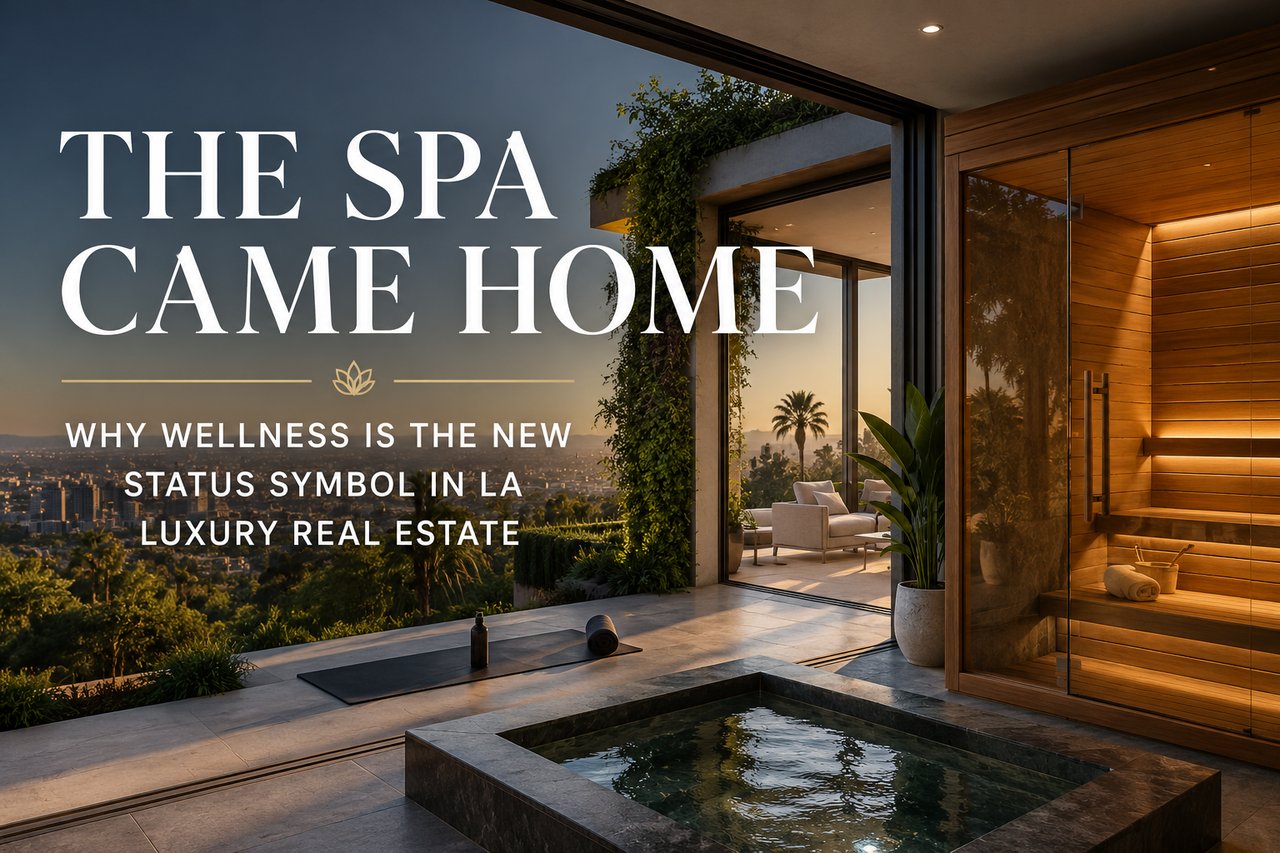
The Spa Came Home: Why Wellness Is the New Status Symbol in LA Luxury Real Estate
For decades, the hallmarks of a premier Los Angeles home were easy to identify: the infinity-edge pool, the private screening room, the temperature-controlled wine cellar, and expansive spaces designed for entertaining. Those features still matter. But today, the most sought-after square footage in a luxury home isn't where people gather—it's where they recover.
Wellness has become the defining luxury of modern real estate. And in Los Angeles—a city that has long embraced health, performance, and self-improvement—it is fundamentally reshaping buyer priorities, architectural design, and property values.
As someone who works daily with luxury buyers, developers, and sellers across Los Angeles, I've watched this shift accelerate in real time. The homes commanding the strongest interest today aren't simply beautiful; they're intentionally designed to help their owners feel better.
Recovery Spaces Are No Longer Optional
Just a few years ago, an infrared sauna or cold plunge was considered a niche amenity reserved for wellness enthusiasts. Today, these features have become mainstream expectations among luxury buyers.
Recent industry research indicates that more than 40% of affluent homebuyers actively seek integrated wellness amenities such as saunas, steam rooms, and dedicated recovery spaces. Cold plunge pools—once found primarily in specialty wellness studios—are now appearing in a growing percentage of high-end new construction projects throughout Los Angeles.
The reason is simple: convenience.
Today's luxury buyers are not investing in wellness amenities to impress guests. They're investing in systems that improve their quality of life every day. Driving across town to a recovery studio, fitness club, or wellness center creates friction. A thoughtfully designed home removes that friction entirely.
When a sauna, cold plunge, meditation room, or recovery lounge sits steps away from the primary suite, wellness transforms from an occasional activity into a daily ritual. Increasingly, that's what luxury means.
Designing Homes That Lower Your Heart Rate
The second major trend influencing luxury real estate is biophilic design—the intentional integration of nature into the built environment.
What began as a design movement has evolved into a buyer expectation.
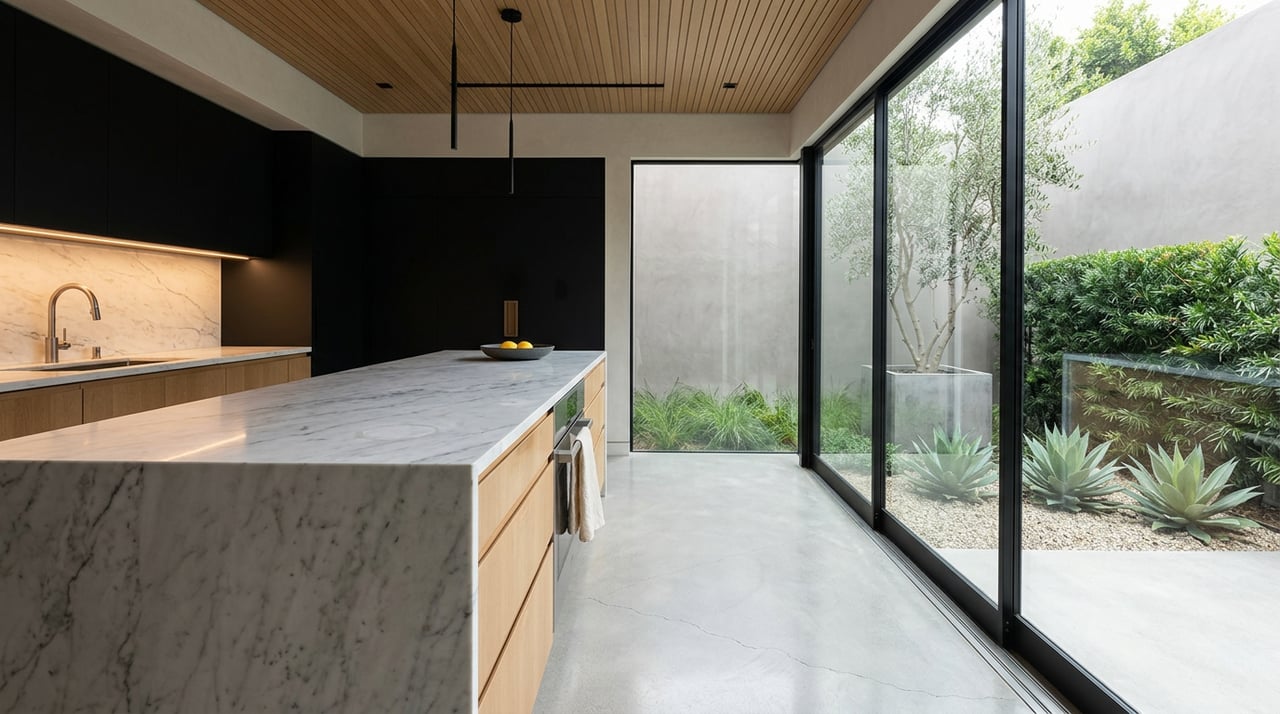
Homeowners are increasingly drawn to spaces featuring natural materials, abundant daylight, indoor gardens, living walls, skylit courtyards, and water features designed to create a sense of calm. Stone, wood, and organic textures have become more valuable than flashy finishes because they contribute to how a home feels.
This trend is particularly powerful in Southern California, where indoor-outdoor living remains one of our greatest advantages.
Retractable glass walls, open-air dining areas, covered terraces, outdoor wellness spaces, and private courtyards are no longer simply architectural flourishes—they are extensions of the living experience itself.
In my experience, a home that seamlessly connects indoor and outdoor environments will consistently outperform a larger home that lacks that connection. Buyers respond emotionally to spaces that feel open, natural, and restorative.
And emotion drives real estate decisions.
The Most Valuable Luxury Features Are Often Invisible
Perhaps the most interesting evolution in luxury housing is the growing importance of features buyers can't immediately see.
Sophisticated buyers are paying closer attention to indoor air quality, advanced filtration systems, circadian lighting technology, humidity control, acoustic design, and sleep optimization.
These systems don't photograph well. They rarely make headlines in listing descriptions. Yet they have a tremendous impact on how a home functions and how its occupants feel every day.
The wellness industry has spent years emphasizing the importance of clean air, quality sleep, and proper light exposure. Luxury real estate is finally catching up.
The result is a new category of luxury home—one designed not just for appearance, but for performance.
What Sellers Need to Understand
For homeowners preparing to sell, this shift presents a significant opportunity.
Creating a wellness-focused property doesn't necessarily require a six-figure renovation or a resort-style spa addition. Often, strategic improvements can dramatically change buyer perception.
Enhanced air purification systems, upgraded lighting design, thoughtfully curated outdoor spaces, dedicated fitness or recovery areas, and primary suites centered around relaxation can all help position a home within the wellness category.
And positioning matters.
A home's value isn't determined solely by its physical attributes. It's determined by how buyers perceive those attributes and the lifestyle they represent.
This is why marketing and presentation have become more important than ever. The right narrative can transform a property from simply another luxury home into a wellness retreat—and today's buyers are willing to pay a premium for that distinction.
What This Means for Buyers
If you're actively searching for a luxury property, it's worth looking beyond the obvious.
Ask whether the wellness features are truly functional or simply cosmetic. Evaluate how the home interacts with natural light throughout the day. Consider whether indoor and outdoor spaces are genuinely integrated or merely designed for photography.
These are the details that often separate lasting value from temporary trends.
The most successful buyers aren't necessarily purchasing the homes with the most amenities. They're purchasing the homes that deliver the best lifestyle experience.
The Future of Luxury Is Personal Well-Being
Luxury real estate has always reflected cultural priorities.
In the past, buyers prioritized status, entertainment, and scale. Today, health, longevity, recovery, and personal well-being are taking center stage.
The homes generating the strongest emotional response—and often commanding the highest premiums—are the ones that make people feel healthier, calmer, and more connected the moment they walk through the door.
The spa didn't disappear.
It simply came home.
If you're considering buying, selling, or developing luxury real estate in Los Angeles, I'd be happy to discuss how these wellness trends are influencing value in today's market and how they may apply to your specific property or search.
Amir Jawaherian
The Agency | Los Angeles
CA DRE #01899893
[email protected]
(818) 561-1600